Case Articles
When a Reflux Implant Breaks, the Clinical Record Must Explain Why
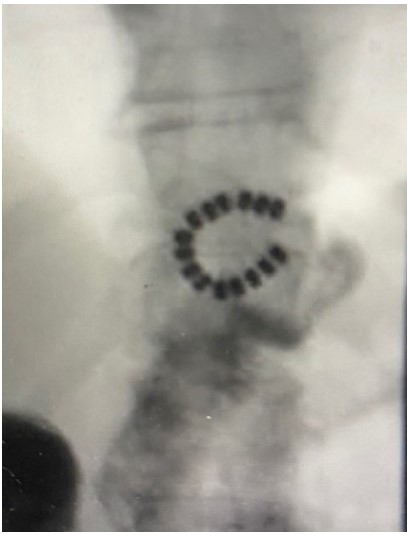
A federal court has placed a product-liability case involving a broken LINX reflux implant on a discovery schedule that runs through 2028, setting up a detailed inquiry into why the device failed and what caused the patient’s returning symptoms. The case, Vincent v. Torax Medical, concerns an implant that the plaintiff says was included in a 2018 recall and later had to be removed surgically.
What Is the LINX Reflux Implant?
LINX is an alternative to continuous medication or more extensive anti-reflux surgery for selected patients with gastroesophageal reflux disease, commonly known as GERD. The device is a small ring of magnetic beads connected by titanium wires. A surgeon places it around the lower end of the esophagus. The magnetic attraction is intended to help the valve remain closed against reflux while allowing the ring to open when the patient swallows.
What Was the 2018 LINX Recall?
The FDA approved LINX through the premarket approval pathway in March 2012. In April 2018, Torax Medical initiated a recall of certain devices after identifying a possible out-of-specification condition that could allow a bead to separate from an adjacent wire link. The FDA posted the Class II recall the following month. A separation can leave the ring open or discontinuous, potentially allowing reflux to return and leading to another operation.
What Does the Vincent v. Torax Medical Complaint Allege?
Deral Vincent alleges that he received LINX on July 27, 2018, after the recall had begun. According to his complaint, his particular implant was within the recalled population. He says the device provided little benefit, his GERD symptoms returned, and surgeons removed the failed implant on April 3, 2025. He sued Torax Medical and Ethicon in Minnesota federal court on July 30, asserting manufacturing-defect, negligence, negligence per se, and strict-liability claims.
Where Does the LINX Lawsuit Stand Now?
The defendants answered the complaint on August 17. No court has found that Vincent’s implant was defectively manufactured or that a device failure caused all of his symptoms. The September 23 scheduling order allows fact discovery through January 26, 2028, and expert discovery through May 26, 2028. Each side anticipates calling as many as five experts. The case is expected to be ready for a three-day trial around November 27, 2028.
Was the Explanted LINX Device Part of the Recall?
The recall gives the litigation a defined starting point, but it does not answer the central questions. The first is whether the explanted device actually separated at a wire link and whether its serial or lot information places it within the affected population. Operative notes, imaging, photographs, pathology, and the condition of the returned implant may help distinguish a manufacturing failure from damage during removal or another explanation.
What Else Can Cause GERD Symptoms to Return After LINX?
The second question is clinical. Recurrent heartburn or regurgitation can follow an open implant, but symptoms can also reflect progression of GERD, a recurrent hiatal hernia, altered esophageal motility, patient anatomy, or a problem with sizing or placement. The record should show why LINX was selected, whether preoperative testing confirmed abnormal reflux, whether a hiatal hernia was repaired, how the device was positioned, and what objective testing was performed when symptoms returned.
Which Medical Experts Are Needed in LINX Reflux Implant Litigation?
Those issues call for more than a general discussion of the recall. A foregut surgeon can address patient selection, technique, device position, and the decision to remove the implant. A gastroenterologist can evaluate reflux testing, motility, symptoms, and alternative causes. Radiology may matter if imaging documents a discontinuity, migration, or recurrent anatomy. The appropriate specialties will depend on the actual disputed facts rather than the product name alone.
What Comes Next in Vincent v. Torax Medical?
Vincent’s case is still at an early stage. The schedule now gives both sides time to determine whether the medical record supports the complaint’s account, a different explanation, or some combination of device and patient factors.
Sources
Vincent v. Torax Medical — Federal Docket
https://dockets.justia.com/docket/minnesota/mndce/0:2026cv03454/235293
FDA Premarket Approval Record for LINX
https://www.accessdata.fda.gov/scripts/cdrh/cfdocs/cfpma/pma.cfm?id=P100049
FDA Class II Recall Record
https://www.accessdata.fda.gov/scripts/cdrh/cfdocs/cfRes/res.cfm?id=163593
Frequently Asked Questions About LINX Reflux Implants and Litigation
1. Does the 2018 recall prove that a LINX implant was defective?
No. A recall marks the starting point of the inquiry, not the answer. In Vincent v. Torax Medical, no court has found that the implant was defectively manufactured, and the plaintiff must still show that his device separated at a wire link and belonged to the affected population.
2. If reflux symptoms return after LINX, does that mean the device failed?
Not necessarily. An open implant can cause heartburn or regurgitation to return, but so can GERD progression, a recurrent hiatal hernia, altered esophageal motility, the patient’s anatomy, or a sizing or placement problem.
3. What records help determine why a LINX implant failed?
Device evidence includes operative notes, imaging, photographs, pathology, and the condition of the removed implant, which can help distinguish a manufacturing failure from removal damage. The clinical record should show why LINX was chosen, what preoperative testing found, how the device was positioned, and what testing followed returning symptoms.
4. Which medical specialists evaluate LINX implant claims?
A foregut surgeon can address patient selection, surgical technique, and device removal. A gastroenterologist can evaluate reflux testing and alternative causes, and a radiologist may be needed if imaging shows a discontinuity or migration. The right mix depends on the disputed facts.
5. When could Vincent v. Torax Medical go to trial?
Under the current schedule, fact discovery runs through January 2028 and expert discovery through May 2028. The case is expected to be ready for a three-day trial around November 2028, with each side anticipating up to five experts.
FDA Import Action Sharpens the Medical Questions in Olympus Scope Infection Cases
By Burton Bentley II, MD, FAAEM These Olympus endoscope infection lawsuits raise important questions about medical causation and the evidence needed to establish whether…
Read article
Exhumation Autopsy: When Is It Warranted in Civil Litigation?
By Burton Bentley II, MD, FAAEM An exhumation autopsy in civil litigation is an extraordinary forensic procedure involving significant scientific, legal, and ethical considerations.…
Read article
IVF Genetic Testing Faces a Legal Challenge Over Promised Benefits
By Burton Bentley II, MD, FAAEM A federal judge dismissed a proposed IVF genetic testing class action lawsuit challenging LifeView preimplantation genetic testing, but…
Read article
Spinal Cord Stimulator Lawsuits and the Search for What Went Wrong
By Burton Bentley II, MD, FAAEM The lawsuits over Boston Scientific’s spinal cord stimulators are proceeding together in federal court, but they do not…
Read article
$117M Talcum Verdict Overturned When Expert Testimony Failed Daubert Challenge
A $117M talcum powder verdict was overturned by a New Jersey appeals court, which found that the expert testimony proffered on behalf of the…
Read article
When Cause of Death is Unclear, Expert Testimony Must Show Causation
To establish medical malpractice, a plaintiff must prove that the healthcare provider’s action fell below the standard of care and that the failure was…
Read article
Two Courts Change the Scope of What’s Protected Under Medical Peer Review Statutes
When a plaintiff sues a doctor for malpractice, the medical facility may also be culpable for negligent credentialing. Healthcare entities have a responsibility to…
Read article
Whistleblower Win For Walgreens, FCA Case Dismissed
A False Claims Act (FCA) lawsuit against Walgreens was recently dismissed by the Southern District of Texas because the claim was not specific enough.…
Read article
Trends in Pediatric Medical Professional Liability Claims in Acute Care Settings
Background: While medical professional liability (MPL) claims involving pediatric cases (ages 0-17 years) represent a small fraction of overall MPL claim activity nationally, they…
Read article
Sixth Circuit Denies Appeal to Plaintiff Who Mistook Healthcare Entity as Not Being Covered by FTCA
Antoinette Lundy filed a medical malpractice lawsuit on behalf of her son after he suffered brain damage during childbirth. As Lundy’s healthcare providers were…
Read article