
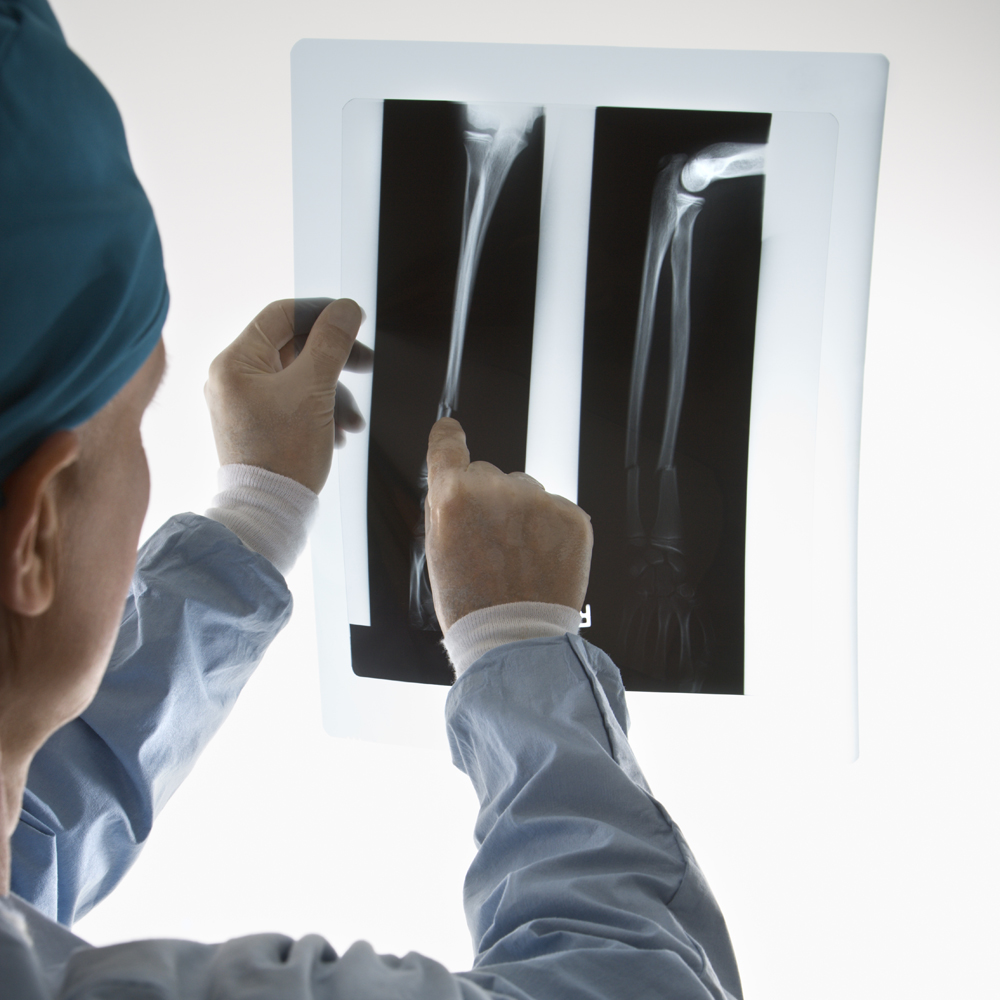
Selecting the Right Orthopedic Surgeon for Your Case

Orthopedic surgery (commonly spelled “Orthopaedic” in academia) is a field of surgery dealing with the surgical treatment of disease and injury of the musculoskeletal system. Orthopedic surgeons are licensed physicians who complete a five year residency program in orthopedic surgery often followed by subspecialization in a specific branch of orthopedic surgery. Common subspecialty areas include Hand Surgery, Total Joint Reconstruction (i.e. arthroplasty), Pediatric Orthopedics, Foot and Ankle Surgery, Spine Surgery, Sports Medicine, and Trauma. Board certification in Orthopedic Surgery is conferred by the American Board of Orthopaedic Surgery, a section of the American Board of Medical Specialties (ABMS). Physicians who enter the field of orthopedics via an osteopathic pathway (D.O. rather than M.D.) are eligible for Board Certification under the American Osteopathic Board of Orthopedic Surgery.

Orthopedic surgeons diagnose, image, medically treat, and surgically correct a broad range of musculoskeletal conditions. Common procedures in orthopedic surgery include arthroscopic surgery upon the knee and shoulder, joint replacement surgery (predominantly upon the hip and knee), spine surgery, and carpal tunnel release. The foundation of orthopedics, however, is the stabilization and treatment of various fractures. Fractures may be treated non-operatively (closed reduction) or operatively (open reduction). Some fractures may require internal hardware (internal fixation) while others require external hardware (external fixation) or no hardware at all. The most common fracture sites include the hip (e.g. femoral neck), ankle, tibia, wrist (radius and/or ulna), humerus, and clavicle. Other acute conditions in orthopedic surgery include compartment syndrome and the management of complex bone and joint infections. Depending on the complexity of the procedure, orthopedic interventions may be performed in the office, in an outpatient surgical facility (ambulatory surgery center), or in a hospital-based operating room.

Orthopedic surgery expert witnesses are critical in several important aspects of orthopedic litigation including standard of care, causation, and harm. Orthopedic surgery expert witnesses may also determine the etiology, extent, and prognosis of various musculoskeletal conditions, including complications caused by trauma or alleged medical negligence. For example, an orthopedic surgery expert witness may look at the circumstances surrounding a work-related injury in order to determine whether, to a reasonable degree of medical probability, a person’s injury was acute rather than related to a preexisting condition. The same expert might also determine the prognosis of the person’s condition, such as the disability rating or need for future medical care. Orthopedic surgery experts are also commonly called upon to perform Independent Medical Examinations (IME). An IME is an indispensable tool for objectively assessing a person’s physical condition. A thorough and impartial IME allows one to make critical determinations regarding the existence, origin, extent, and prognosis of a specific orthopedic condition.

Litigation against orthopedic surgeons typically stems from poor surgical outcomes resulting in pain or functional loss. This may occur as a result of surgical technique, infection, or other complicating factors. Delayed treatment of “compartment syndrome” (a limb-threatening elevation in extremity pressure) is another area of risk for practicing orthopedists. Since orthopedic surgeons employ a range of highly specialized surgical devices, orthopedic expert witnesses are often called to testify for both plaintiff and defense in product liability cases. Such litigation is increasingly common with many cases gaining national notoriety as class action lawsuits.

Given the complexity and expense of orthopedic surgery litigation, it is imperative to carefully choose an orthopedic surgery expert witness. A top-tier orthopedic surgery expert witness will have Board Certification, full-time clinical practice, and a professorial appointment at a major university medical center. Beyond those requisite steps, be sure to interview your expert witness candidate to assure impartiality, freedom from conflict, and communication skills. The expert should also agree to remain involved with the case throughout all phases of litigation. When all criteria are met, you will have minimized your risk and set the best course for investigating your orthopedic surgery case.

To find the right orthopedic surgery expert witness for your case, contact Elite Medical Experts today.

Popliteal artery injury

FOCUS

Arthroscopic knee surgery resulting in unrecognized popliteal artery injury.  A medical negligence case requiring Orthopedic Surgery medical expert witness case review.

BACKGROUND

Any orthopedic surgical procedure can result in damage to adjacent structures such as tendons, arteries, and nerves. The mere occurrence of damage is not de facto proof of negligence, and only a Board-Certified ORTHOPEDIC SURGERY expert can determine whether such damage resulted from medical negligence.

CASE

A 40-year-old man underwent a routine arthroscopic knee surgery at an outpatient surgical center. The surgeon had difficulty advancing the trocar into the posterior compartment and believed that he may have perforated the synovium. Immediately following surgery, the surgeon noted swelling in the popliteal area yet still discharged the patient without any further observation or testing. By the following day, the patient had severe pain and functional loss in the extremity. He underwent emergency surgery which revealed a laceration of the popliteal artery. Despite surgery, he continued to suffer pain and partial functional loss.

ELITE’S ROLE

Our internal team of physicians and nurses worked to identify an experienced Professor of ORTHOPEDIC SURGERY who could serve as an expert witness and also meet a critical deadline to produce an affidavit of merit within 10 days.

THE MEDICAL EXPERTS

Our Senior Case Strategist secured a leading Professor of ORTHOPEDIC SURGERY with a 28-page Curriculum Vitae including multiple publications on arthroscopic knee surgery. The expert had performed thousands of arthroscopic procedures and was knowledgeable about the risks and avoidance of popliteal artery injury.

OUTCOME

The ORTHOPEDIC expert witness gave a strong opinion regarding breach of the standard of care and failure to properly monitor for a suspected vascular complications. He also reviewed the pathology report and confirmed tissue indicative of violating the joint capsule. The ORTHOPEDIC SURGERY expert’s opinion resulted in an early settlement in the case.

Contact ELITE today to find an orthopedic surgery expert for your medical negligence case.

E-CASE STUDIES are brief clinical vignettes based upon actual cases handled by ELITE. Identifying information has been redacted or altered to protect case confidentiality.

Orthopedic Hardware Failure and Shoulder Injury

E-CASE STUDIES are brief clinical vignettes based upon actual cases handled by ELITE. Identifying information has been redacted or altered to protect case confidentiality.

FOCUS

A damaged orthopedic anchor results in permanent shoulder injury.


BACKGROUND

Orthopedic surgeons routinely deploy specialized surgical hardware such as pins, rods, nails, screws, and anchors. Improperly placed or damaged hardware can result in severe complications.


CASE

A 32-year-old man underwent a routine shoulder surgery utilizing an anchor. The anchor was apparently deformed during surgical insertion, but the surgeon proceeded utilizing the same anchor. The patient developed persistent pain and finally sought a second opinion two years later. The new surgeon found that the original anchor was both damaged and misplaced, resulting in chondrolysis and erosion of the humeral head. The patient required a total shoulder arthroplasty.


ELITE’S ROLE

Our physician-led team was asked to secure an orthopedic surgery expert witness with extensive experience in shoulder surgery. At no additional cost, ELITE reviewed the medical records to look for other issues and to identify the exact type of anchor system used in the patient’s case.


THE MEDICAL EXPERTS

ELITE rapidly secured a top-tier Professor of Orthopedic Surgery from a major West Coast medical university. The ORTHOPEDIC SURGERY expert witness had performed over 1000 shoulder surgeries and routinely deployed the same anchor system specified in the patient’s medical records.


OUTCOME

The orthopedic surgery  expert witness opined that the damaged anchor resulted in hardware migration that caused chondrolysis and pain. The orthopedic surgery expert also testified that the two year delay in removing the anchor caused additional damage to the shoulder such that it required a total arthroplasty rather than a simple revision.

Contact Elite today to secure a orthopedic surgery medical expert for your case.

Delayed diagnosis of tibial plateau fracture

FOCUS

A missed diagnosis on X-Ray (radiograph) results in the delayed treatment of a tibial plateau fracture.  A medical negligence case requiring a Radiology expert witness and Orthopedic Surgeon medical expert witness review.


BACKGROUND

When a skeletal (x-ray, radiograph) imaging study is misread, patient care may be delayed or neglected altogether. While a RADIOLOGY medical expert witness is required to address the standard of care, issues related to causation and harm must be analyzed by an ORTHOPEDIC SURGERY medical expert witness.


CASE

A 34-year-old woman injured her knee injury and presented to an emergency department. The emergency physician examined her and ordered a radiograph. His interpretation was negative as was the interpretation of the radiologist who over-read the film on the following day. The patient was discharged with ongoing pain and persistent gait limitations. Nearly one month later it was discovered that she had suffered an unrecognized tibial plateau fracture that had become displaced. She eventually underwent surgery.


ELITE’S ROLE

During ELITE’s complimentary case consultation, our physician-led team highlighted the need for a RADIOLOGY expert witness on standard of care and an ORTHOPEDIC SURGERY medical expert on causation. The ORTHOPEDIC medical expert’s role was to analyze the nature, extent, and prognosis of the patient’s injury and to determine how her course would have differed with earlier management. Our team further determined that the fracture was subtle and that the emergency physician would not be held liable for missing it, especially since it was also missed by the radiologist who possessed a greater degree of interpretative skill.


THE MEDICAL EXPERTS

Within 3 days, ELITE secured a nationally recognized ORTHOPEDIC SURGERY medical expert witness from the faculty of a major East Coast medical university. The ORTHOPEDIC medical expert specialized in orthopedic trauma and routinely treated tibial plateau fractures. ELITE also retained a Clinical Professor of RADIOLOGY as an expert witness on standard of care. The RADIOLOGY medical expert witness also had staff privileges at a community hospital similar to the one visited by the patient in the case.


OUTCOME

The RADIOLOGY expert witness testified that the fracture was visible on the original films and that it breached the standard of care to miss it. The ORTHOPEDIC SURGERY expert witness opined that had the fracture been recognized on day one, the woman would have been treated non-operatively and would have had a full recovery. In other words, the delay in diagnosis and treatment was the proximate cause of the woman’s need for surgery.


Contact ELITE today to find the right medical experts for your case.


E-CASE STUDIES are brief clinical vignettes based upon actual cases handled by ELITE. Identifying information has been redacted or altered to protect case confidentiality.